Pesticide-free crop cultivation? Trials using micro-organisms show great promise thanks to these scientists
Publication date: 9-11-2026
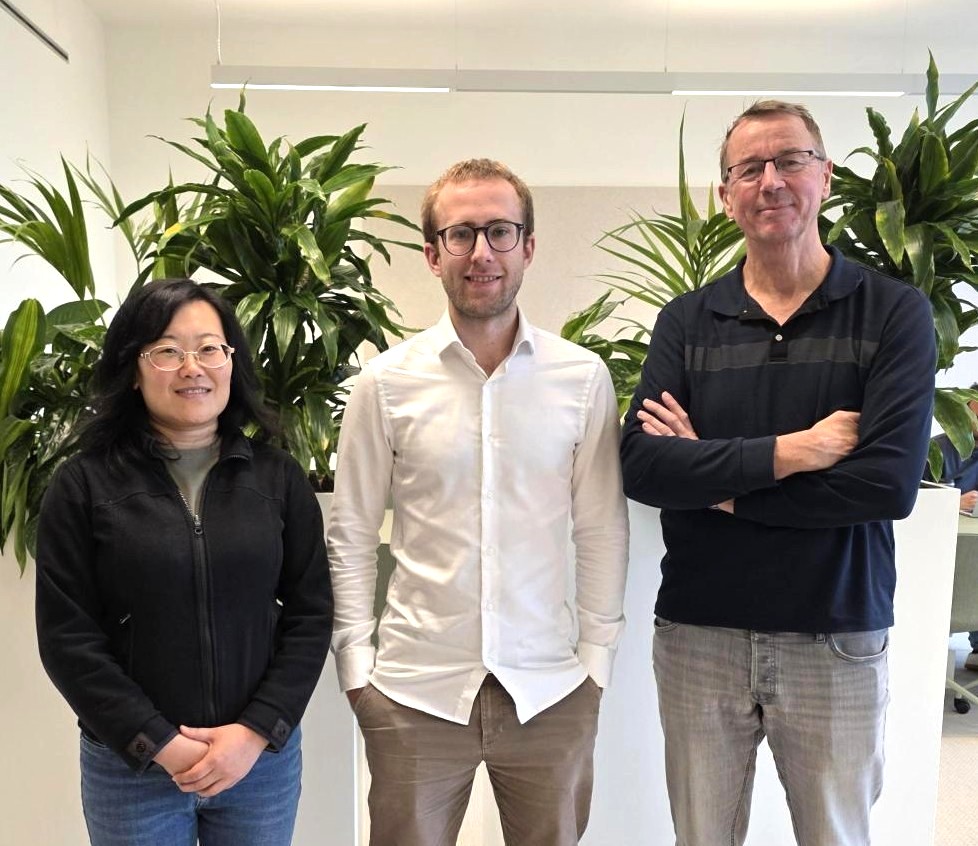
Photo left to right: Lemeng Dong, Roland Berdaguer, and Harro Bouwmeester (UvA).
The use of pesticides in agriculture and horticulture has long been a contentious issue. Could natural crop protection using bacteria and fungi be a viable option? These scientists are leaving their offices and putting on their wellies. Thanks to new funding of €200,000, the start-up MicroBioLogicals is being set up to invent sustainable cultivation.
Roland Berdaguer, Lemeng Dong and Harro Bouwmeester from the University of Amsterdam are the scientists behind MicroBioLogicals. But what are the possibilities for making crops more resilient, based on the latest scientific insights?
Why micro-organisms themselves are the solution for crop protection
There has been a growing understanding of how the root microbiome (comprising bacteria and fungi) protects plants against stress. Translating this knowledge into real products that farmers can use on their fields is very urgent, as conventional pesticides are increasingly being banned, due to their toxicity. These scientists from the Plant Hormone Biology group at UvA have discovered that certain specific micro-organisms have the potential to combat the potato cyst nematode, a devastating pest causing major crop losses in potato fields all over the world.
MicroBioLogicals moves field trial thanks to Biotech Booster funding
Based on these discoveries, the team is now working on a new biological crop protection product. However, there is a significant difference between controlled laboratory conditions and how plants grow outdoors. The MicroBioLogicals team therefore intends to carry out field trials. The €200,000 in funding they have just secured from the national Biotech Booster programme will be used for this purpose. Lemeng explains: ‘It’s wonderful when we can apply the discoveries we make in the lab to the field and thus bridge the gap between science and practical application.’
A long journey to bring innovative crop protection to market
A marketing authorisation application to the Board for the Authorisation of Plant Protection Products and Biocides (Ctgb) is required for a potential end product. The future product should be compatible with the agricultural machinery already used by potato growers.
Roland hopes to be able to take concrete steps in the project soon. ‘What’s more, I’ve always found entrepreneurship interesting. For me, this is a brilliant combination: I get to work on science whilst setting up a business at the same time.’
IXA’s Business Developer, Lucia Malone Portu, adds: “It’s not easy to develop this type of innovation from within the academic world, but Lemeng, Roland and Harro are showing that it can be done. It’s very inspiring to see.”