Developing a treatment for a fatal brain disease: a realistic path
Publication date: 29-09-2026
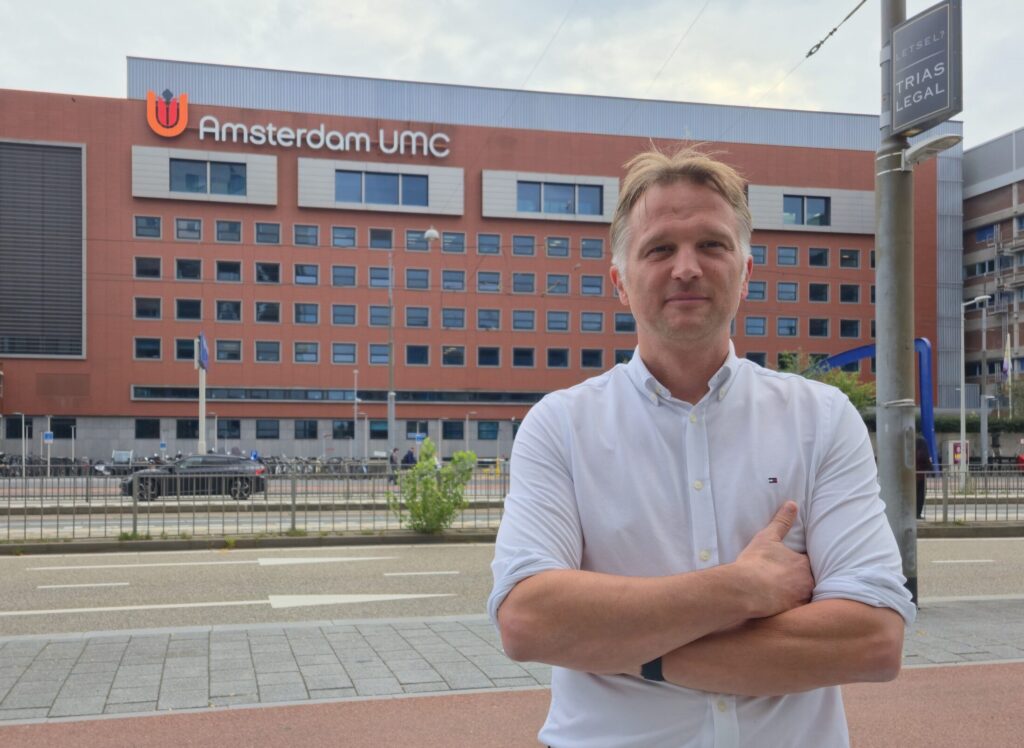
Pieter Slijkerman, business developer IXA for Amsterdam UMC
Vanishing White Matter (VWM) is a rare genetic brain disease that makes children lose the ability to walk and talk. Finally, there‘s a breakthrough. “A successful clinical study does not automatically lead to a registered medicine.” Says Pieter Slijkerman (IXA) who determined the early strategy for developing the treatment.
A realistic path towards developing a treatment for VMW
A medical breakthrough doesn’t automatically lead to a treatment that children can get. Pieter Slijkerman explains more: “A successful clinical study does not automatically lead to a registered medicine. Development still requires major investment in studies, manufacturing and regulatory work. For an ultra-rare disease, the market may not do that on its own. So, the question became: how do you attract the investment required for registration of the treatment to start benefitting more children? “
Securing Intellectual Property and collaborations all-around
“One early step was securing Intellectual Property (IP) around the project. IP was not about maximizing price. It gave us control over the development path and helped keep affordability part of the strategy. There was also a lesson for us as an academic medical centre. What once felt close to “playing pharma”, can sometimes be part of the bridge between research and patients. For ultra-rare diseases, researchers, funders, technology transfer teams and entrepreneurs may need to design a different path together.“
A new company for the road to drug approval
The required drug for the new treatment, called guanabenz, is currently available only in a research setting. Therefore, Amsterdam UMC has begun the process of seeking approval from the European Medicines Agency. It’s led by the newly established spin-out GuanaRep, with Vincent van der Wel steering the development pathway alongside Amsterdam Academic Ventures.
About the effects of Vanishing White Matter in children
VWM usually strikes between the ages of one and six, slowly destroying the brain’s white matter. Children lose the ability to walk, talk, and think clearly, and many die young. Researchers at the Amsterdam Leukodystrophy Center, led by Prof. Marjo van der Knaap, found a way to block a process believed to drive VWM. “This is the first time it has been shown that this fatal childhood brain disease can be ameliorated. That is a major and hopeful step for these children and their families,” says Van der Knaap.
The medical trial was funded by ZonMw, the Dutch Brain Foundation, the European Leukodystrophy Association, and the VWM Families Foundation.
Get in touch