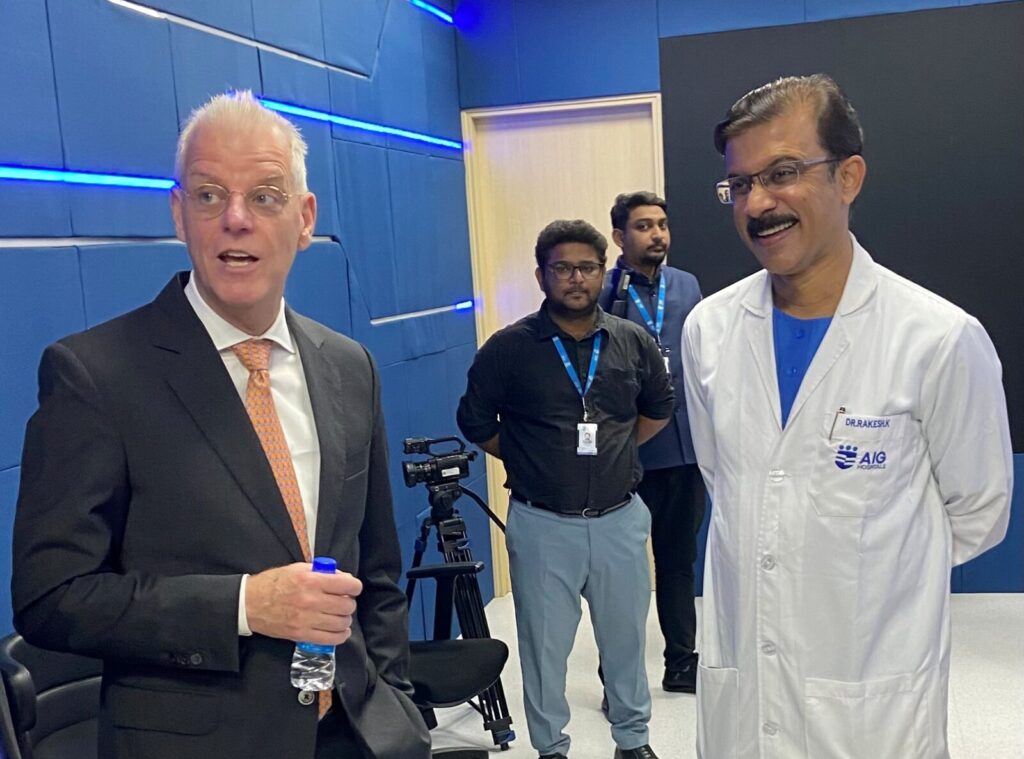
International partnership for AI-breakthrough in early gastrointestinal cancer screening

A new smart AI tool will be able to help doctors detect very early signs of cancer in the esophagus. Jacques Bergman from Amsterdam UMC is involved in the clinical validation. “Artificial intelligence is opening a new chapter in our field, offering the potential to detect subtle abnormalities that were previously very difficult to recognize systematically.”
Collaboration across medicine, engineering, and industry
Amsterdam UMC, TU Eindhoven, and Cosmo Pharmaceuticals are joining forces to create next generation AI tools that support doctors in real time. By combining clinical expertise, engineering knowledge, and experience in regulated medical software, the partnership aims to improve screening for early cancer signs, including Barrett’s oesophagus.
Addressing a major clinical challenge
Barrett’s oesophagus is a precancerous condition caused by acid reflux, affecting millions worldwide and increasing the risk of esophageal cancer. Detecting early changes during endoscopy remains difficult, but AI could help identify subtle abnormalities more accurately and in real time.
From research to clinical practice
The collaboration will build high-quality datasets and develop AI algorithms, creating one of the most comprehensive data resources for Barrett’s oesophagus. Cosmo Pharmaceuticals will lead the process of bringing the technology to market, ensuring it meets global standards for quality, safety, and cybersecurity, with the goal of future regulatory approval in Europe and the United States.
Artificial intelligence is opening a new chapter in our field, offering the potential to detect subtle abnormalities that were previously very difficult to recognize systematically in the Barrett’s esophagus surveillance program.